MEDIA CENTRE / TEXTS

LOGIN
CALENDAR
CONTACT
LINKS
IMPRINT
TERMS OF USE
Bart Lootsma: Inversion and Immersion
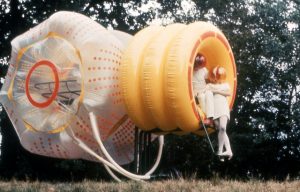
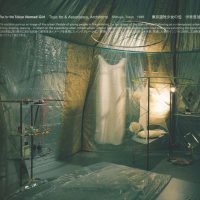
The role of artificial light in architectue is defined by two principles: inversion and immersion. The principle of inversion is obvious: light appears in the dark and neon signs stand out against a dark background. The principle of immersion is very different. Already in the earliest period of electric light, people were aware that it made it possible to create a second daytime. Already in 1890, Electric Bathing at Coney Island in New York enabled people to bathe in electric light, without the idea that the experience would be second rate. [more]
RCT / Arno Brandlhuber - Bart Lootsma
Trauma and Disappointment, a conversation between Bart Lootsma and Pier Vittorio Aureli
Gert Jan Willemse was a Dutch architect whose major work consists of a series of books. Consisting of small pencil drawings that could take several weeks to make and inspired by literary sources, these books seem to show a ‘Design for a world without people’, to quote the Austrian writer Peter Rosei, who was one of the inspirational sources of this beautiful work. Born in Apeldoorn, The Netherlands, in 1957, Gert Jan Willemse took his own life in Switzerland in 1987. In a conversation with Bart Lootsma that was published in HUNCH, Pier Vittorio Aureli considers this work as the particular Dutch contribution to what he has recently called “The Project of Autonomy” in a very interesting book that was published by Princeton Architectural Press in 2008, which is subtitled: “Politics and Architecture within and against Capitalism”. [more]
BAS PRINCEN, MILICA TOPALOVIC: Exhibition INVISIBLE FRONTIER
Exhibition 'INVISIBLE FRONTIER, Landscape Fictions Based on True Stories' by Bas Princen and Milica Topalovic in the AUT Architecture Gallery in Innsbruck. The exhibition is the result of a collaboration with the Chair for Architectural Theory of the Leopold Franzens University in Innsbruck. [more]
Bart Lootsma: Research for Research Introduction
Research for Research is part of an ambitious undertaking that strives at no less than to rewrite the history of urban planning of the twentieth century as a history of research. In this research we analysed a series of canonized urban proposals and theories on the basis of three questions. First: wat kind of research were these projects based on concerning the real situation as found? Second: what kind of political and bureaucratic system did the projects presuppose in order to be realized? Third: what state of technology did the projects presuppose? This leads to a history that is not so much a history of visions, but a history of interpretations and extrapolations of the real. [more]
Bart Lootsma: Hong Kong Casablanca Formal Formless
Hong Kong and Casablanca appear in this article as two cities that both have achieved their specific character as a result of complex processes of change that result from different forms of governance.
How different these cities may be from each other, in some ways they are also similar. Both are port cities, cities of trade and extremely dynamic. They were among the earliest ‘global cities’ and both attracted immigrants from Western Europe as well as large populations of immigrants from the hinterland. Even if Hong Kong and Casablanca have a long history of settlement -going back to the Sung Dynasty and the Zenata Berbers in the eleventh century- their growth really started from the middle of the nineteenth century on, under the influence of British and French colonialism. Hong Kong was under British administration from 1841 to 1997, Morocco under French protectorate between 1907 and 1956. Both Hong Kong and Casablanca experienced an incredible growth –economically, in terms of population and of built substance- from the very moment of their colonization. Both are under independent rule today, the first as a part of China and the latter of Morocco but both take in a particular place and territory within these countries. [more]
A Conversation between Olafur Eliasson and Bart Lootsma
Between 29.05.08 and 20.07.08 the Pinakothek der Moderne in Munich shows 'Your mobile expectations: BMW H2R project' by the artist Olafur Eliasson: a frozen sculpture based on BMW's record braking hydrogen powered car. This conversation between [more]
Otto Neurath: Isotopia
BART LOOTSMA: The nth typology, the typology of the and, or the end of typology?
Traditionally, in dwelling, ideas about the collective have been expressed in types, both on the level of the individual dwelling as well as on the level of urbanism. Today however, this relationship is not as obvious any more as it used to be. [more]
Van Eesteren and Van Lohuizen: Complementary Twins
Le Corbusier: The Hidden City
Hilberseimer: Radical Urbanism
BART LOOTSMA: ENTIRELY AN INTERIOR JOB
The Poeme Électronique by Le Corbusier, Edgard Varese and Iannis Xenakis
For more than 25 years, the Philips Pavillion and the Poeme Électronique remained Le Corbusier’s most mysterious projects –even though thousands and thousands of people had seen them at the 1958 Brussels Expo. The Oeuvre Complete only shows [more]
BART LOOTSMA: SADAR VUGA BALANCING ACT
For an office that exists for only such a relatively short time, SADAR VUGA has realized an amazingly broad and mature oeuvre. Stunning is that from the beginning, in the work of SADAR VUGA maturity goes hand in hand with innovation –be it never really with experimentation for the sake of the experiment. Firmly rooted in the great former Yugoslavian and Slovenian modernist tradition, Sadar Vuga orientate themselves internationally and their work indeed looks international and timeless. [more]
Diploma Thomas Fussenegger: Matchpoint Melbourne
On March 13th, Thomas Fussenegger took his degree from the Leopold Franzens University with a study of Melbourne. His thesis is that cities have always tried to provide their residents with the best possible urban environment. Due to the growing importance of leisure industry and tourism, cities such as Melbourne are more and more forced to compete for becoming hot spots on the world map. Through a comprehensive analysis of the city it is shown how sport and design have become synonymous for Melbourne's local culture and could simultaneously attract worldwide attention. Independently, Thomas Fussenegger developed underutilised sites throughout the inner city. Thereby, sport, identity, branding, experiential design, and public space turned out as the key issues. New cognitions gave rise to a comprehensive concept for Melbourne's urban thinking and planning. The proposed concept shows how architecture can be utilized to combine local and global aspects of city making in order to service social integration and economic growth. A series of individually developed architectural interventions provides an idea on how the overall concept could become part of each project in a different way. Thereby, the inner city of Melbourne becomes the urban playing field. [more]
Bart Lootsma: The Paradoxes of Contemporary Populism
The rise of populism in Europe goes hand in hand with the Crisis of the welfare state and representative democracy. Therefore it is no wonder that architecture, although maybe not in the sense of exceptional architectural masterpieces but as housing and urbanism, is one of the main issues for populist politicians. [more]
Angelika Schnell: The Phantoms of Rotterdam
Rotterdam's reputation as a 'city of modern architecture' has justly grown. But is it right to regard Rotterdam also as a 'city of modern urban development' or of modern urban planning? [more]
Bart Lootsma: Koolhaas, Constant and Dutch culture in the 1960's
A reconstruction of the years before Rem Koolhaas decided to become an architect, in which he was deeply involved in the Dutch avant-garde culture of the nineteen sixties as a journalist and filmmaker. [more]